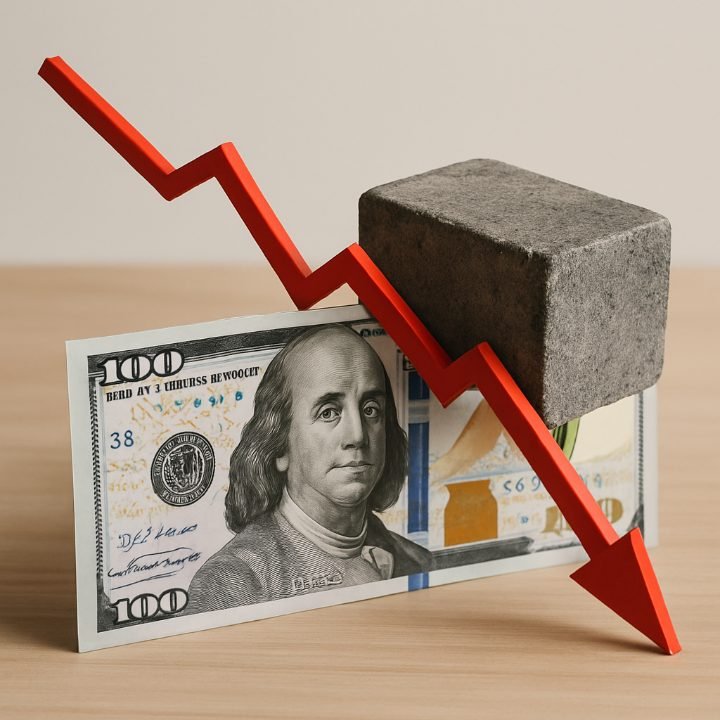


Understanding the Impact of the Yield Curve on Stock Valuations
The recent fluctuations in the market can be attributed to the effects of rising short-term interest rates. It is not the earnings that are misaligned; rather, it is the discount rate used to value these earnings that is increasing, leading to significant changes in stock valuations.
The Role of the Short-End of the Yield Curve
The short end of the yield curve, influenced by the Federal Reserve, encompasses key rates such as the Fed Funds rate, 3-month, and 1-year yields. This segment serves as the foundation for all asset pricing.
Why the Short-End Matters
- It establishes the risk-free rate.
- It directly influences discount rates.
- It determines the cost of capital.
Mechanism of Impact
When short-term rates rise:
- The risk-free return increases.
- Investors demand higher returns from stocks.
- Discount rates rise.
- The present value of future earnings declines.
This sequence results in lower stock prices, even if earnings remain unchanged.
Valuing Stocks with Interest Rates
Stocks are fundamentally valued based on the present value of future cash flows. A simplified formula is:
Stock Value = Earnings / (r − g)
Where:
- r = discount rate
- g = growth rate
The discount rate comprises:
r = Risk-Free Rate + Equity Risk Premium
For example, if the risk-free rate shifts from 2% to 5%, with an equity risk premium of 5% and a growth rate of 3%:
- Before: r = 7%, Value = Earnings / (7% − 3%) = 25x multiple.
- After: r = 10%, Value = Earnings / (10% − 3%) = 14x multiple.
This demonstrates how rate hikes compress valuation multiples significantly.
The Impact on Growth Stocks
Growth stocks, which rely on cash flows projected far into the future, are particularly vulnerable to rising short-term rates:
- Higher rates increase discounting.
- The value of distant cash flows diminishes.
Consequently, high-growth and technology stocks tend to decline more sharply, while value stocks generally withstand these pressures better.
Liquidity and the Short-End of the Curve
Higher short-term rates can tighten financial conditions:
- They raise borrowing costs.
- They slow down lending and speculation.
This reduction in margin usage, risk appetite, and equity inflows highlights the short end’s control over market liquidity.
Influence of the Short-End on the Long-End
The long end of the yield curve, which includes 10-year and 30-year yields, reflects:
- Inflation expectations.
- Growth expectations.
- The anticipated path of future short-term rates.
When the Fed raises rates aggressively, markets often expect slower growth and potential future rate cuts, leading to long-term yields that may rise less or even fall, resulting in an inverted yield curve.
Signals from an Inverted Curve
An inverted yield curve occurs when short-term rates exceed long-term rates, typically indicating:
- Tight monetary policy.
- Expected slowing growth.
- Increased recession risk.
Historically, inversions have preceded recessions, and stock performance often suffers following the inversion rather than at the moment it occurs.
The Feedback Loop of Rates
The sequence of events is as follows:
- The Fed raises short-term rates.
- Financial conditions tighten.
- Growth slows.
- Inflation expectations decrease.
- Long-term yields stabilize or decline.
This creates a paradox where the Fed’s actions push short rates higher while the market pulls long rates lower.
The Importance of Long-Term Rates for Stocks
The long end of the yield curve affects:
- Mortgage rates.
- Corporate borrowing costs.
- Overall economic growth.
A decline in long-term rates can provide support for the economy and stock valuations, while a sharp increase can exert pressure on both growth and valuations.
Key Takeaways
The short end of the yield curve sets the discount rate, which is crucial for stock valuations. Rising short-term rates lead to lower valuation multiples, while the long end reflects expectations regarding future short rates. An inverted yield curve can signal impending economic weakness, making it essential to monitor the short end for insights into market dynamics.
Chapwood Investments, LLC, is a partner of Ethos Financial Group, LLC, a Securities and Exchange Commission-registered investment advisor. No mention, opinion, or omission of a particular security, index, derivative, or other instrument in this article constitutes an opinion on the suitability of any security. The information and data presented here were obtained from sources deemed reliable, but their accuracy and completeness are not guaranteed. At any given time, principals at Chapwood Investments, LLC may or may not have a financial interest in any or all of the securities or instruments discussed in this article. Guest contributors do not receive compensation and do not provide endorsements or testimonials. Past performance is not indicative of future results.